One Night, Ten Thousand Wishes: A First-Timer's Guide to Chiang Mai's Lantern Festival
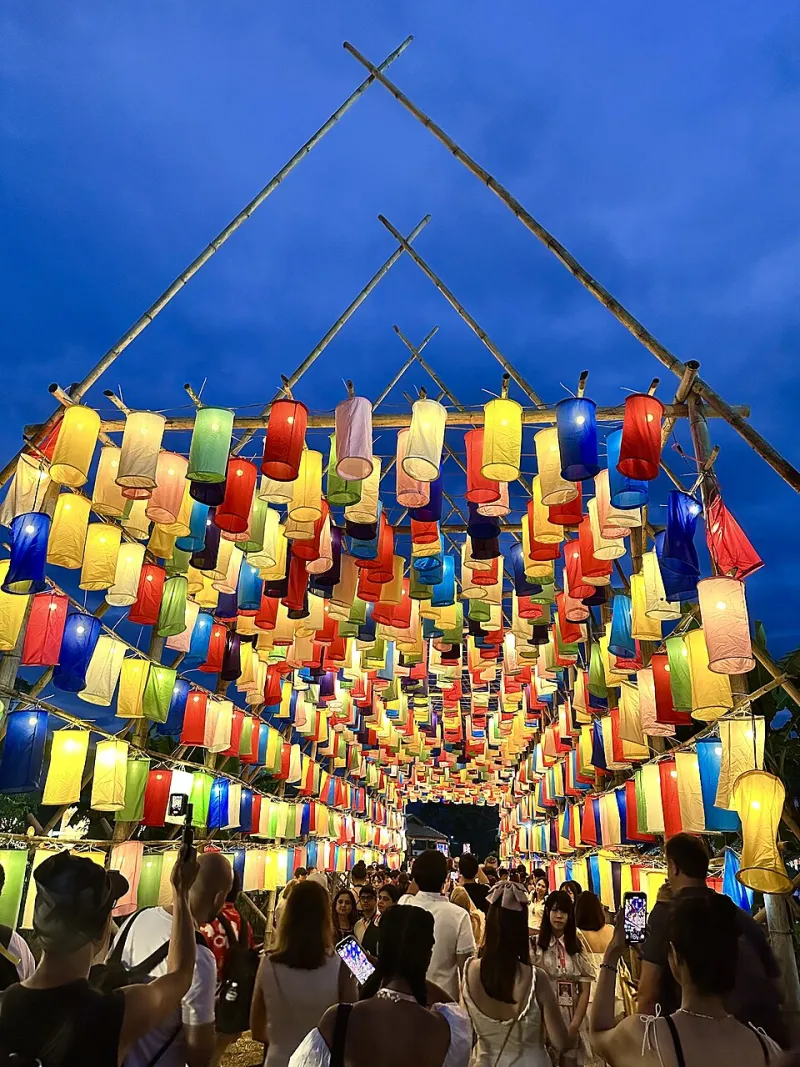
Photo: ManoiCMU, CC BY-SA 4.0, via Wikimedia Commons
There are sunsets you remember, and then there's the moment the entire sky turns into a slow-moving constellation. If you've ever scrolled past a photo of Chiang Mai's lantern festival — hundreds of glowing paper orbs drifting over ancient temples — and thought, I need to be there someday, this is your sign. That someday is the second or third week of November, and it's closer than you think.
What Yi Peng Actually Is (and Why It's Not Just a Photo Op)
Yi Peng is a Lanna tradition, rooted in northern Thailand's own calendar, that coincides with the more widely known Loy Krathong festival. Locals release khom loi — paper hot-air lanterns — as a way of letting go of misfortune and paying respect to the Buddha. Families gather, temples glow with candlelight, and the moat around Chiang Mai's Old City flickers with floating offerings.
Here's the thing many first-time visitors don't realize: this isn't a single event with a single venue. It's a citywide — really, a regionwide — observance. That's good news for travelers, because you have options. It's also why the festival has spawned a small industry of overpriced, inauthentic "lantern events" that can leave a bad taste if you don't know what you're booking.
The Real Deal vs. the Tourist Trap
Let's talk about the elephant in the room — or rather, the ticketed event on the outskirts of town.
You've probably seen the viral photos from mass-release ceremonies at places like Mae Jo, where thousands of lanterns launch in unison. These organized events can be genuinely spectacular, but tickets often run anywhere from $40 to well over $100 for foreign visitors, and some iterations have faced criticism for being more commercial production than cultural ceremony. Some years they've been canceled or rescheduled entirely, so never build your whole trip around one.
The local alternative? It's free, it's authentic, and it's arguably more moving. Head to the Old City moat, the Three Kings Monument, or Wat Phan Tao — a teakwood temple that becomes candlelit magic during the festival. Temples like Wat Lok Molee host their own ceremonies where you can release a lantern alongside local families, often for the modest cost of the lantern itself (around 100–300 baht, or $3–9). Ask before launching; some temples only release lanterns at specific ceremonial moments.
Insider rule of thumb: if an event is marketed primarily in English with Western-style entertainment packages, it's a production. If it's centered on a temple and the crowd is mostly Thai families, you've found the real thing.
When to Book — and When to Go
Yi Peng follows the Lanna lunar calendar, typically landing in November, though the exact dates shift each year. Flights to Chiang Mai from Bangkok (about $40–80 one-way on local carriers) and hotels in the city sell out months in advance — we're talking June or July for the best rates. US travelers should also note that domestic flight prices spike the week of the festival, so locking in autumn travel early pays off.
A few practical notes for the trip itself:
- Pack layers. November in northern Thailand is the cool season — evenings can dip into the 60s, a pleasant shock after Bangkok's humidity.
- Book Old City accommodation early if you want walkable access to the moat ceremonies. Staying near Nimman or the riverside works too, just budget for a songthaew (shared red truck taxi) ride.
- Arrive a few days early. The lead-up includes lantern-making workshops, parades, and temple fairs that are wonderful without the peak-night crowds.
Releasing a Lantern, Respectfully
A lantern release isn't a photo prop — it's a prayer. Locals will tell you to pause, think of someone or something you're grateful for, and make a quiet wish before letting go. Do the same.
A few etiquette pointers:
- Dress modestly, especially near temples — shoulders and knees covered.
- Ask before photographing monks or families up close.
- Never release lanterns outside designated areas. Fire risk is real, and parts of the city restrict launches for safety and air quality reasons.
- Skip the drone. Several ceremonies ban them, and honestly, the memory beats the footage.
There's also an ongoing environmental conversation around lantern releases — paper, wire, and fire falling back to earth isn't without consequence. Some travelers choose to participate in a single, temple-sanctioned release rather than launching nightly, and to support the local communities and cleanup efforts that make the festival sustainable. Thoughtful participation is part of respectful travel.
Where the Sky Fills With Light
If you want the postcard moment without the ticket price, claim a spot along the moat near Tha Phae Gate around sunset. As darkness settles, the first lanterns rise from temple courtyards, then dozens, then hundreds, until the sky looks like reverse snowfall. Grab a khao soi (curry noodle soup) from a street cart, find a curb, and just look up.
For a quieter vantage, Wat Phra That Doi Suthep on the mountain above the city offers a sweeping view of Chiang Mai glowing below — arrive early, as the road up gets busy.
Some travel moments are worth the hype. This is one of them. Start planning now — November comes faster than you'd think.