Homework at High Tide: The American Families Trading Spring Break for a Thai Villa Semester

Photo: PoolSafely, CC BY 2.0, via Wikimedia Commons
There's a moment that keeps repeating itself in the stories American families tell after a month in Thailand. It's not the temples or the beaches. It's smaller than that: a seven-year-old bargaining for mangoes in broken Thai, a teenager teaching the villa's housekeeper how to throw a football, a grandmother reading on a shaded deck while geckos chirp in the rafters.
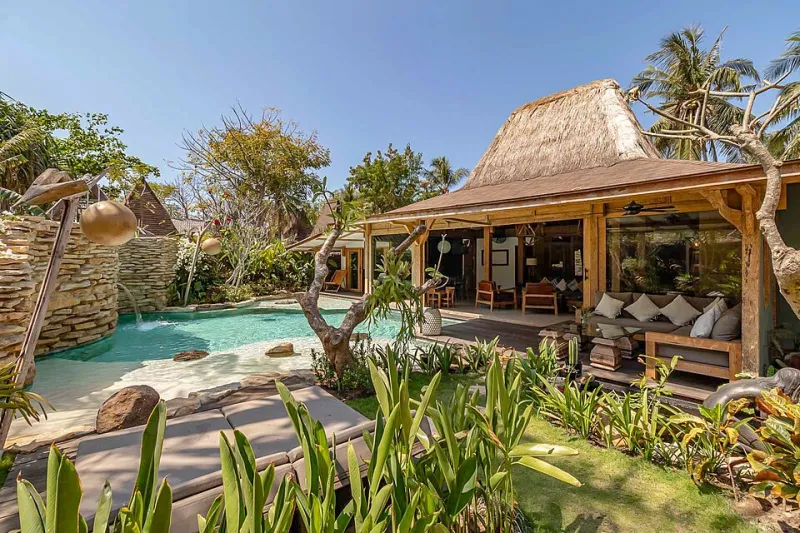
That's the quiet pitch behind the fastest-growing trend we're seeing at Cielo: families — often with grandparents in tow — booking a single villa for four to eight weeks instead of the usual sprint. The kids keep up with school online. The parents work remotely or don't. And everyone comes home with something a week at a theme park simply can't manufacture.
The Math That Changes Everything
Start with the numbers, because that's usually where the conversation begins. A staffed four-bedroom villa in Phuket or Koh Samui during the American spring semester — say, February through April — typically runs between $400 and $900 per night depending on season and size. Split that across three generations and it starts looking less like a splurge and more like a spreadsheet win.
Compare it to what the same family would spend on a week in Orlando: four park tickets at $150-plus a day, two cramped hotel rooms, airport food, and the souvenir tax. The theme park week routinely clears $10,000 before you've bought a single churro. The month-long villa stay, with a private pool, a cook, and no lines for anything, often lands in the same range — for four times the duration.
One dad from Denver put it to us plainly: "At Disney, we waited in line for eight hours to be together for three minutes. Here, we were just... together. For a month."
School Runs at 7 A.M., Longtails at 3 P.M.
The remote-schooling piece is less daunting than it sounds. Most US school districts already run on platforms like Google Classroom or Canvas, and Thailand is conveniently ahead of US time zones — a Zoom homeroom at 8 a.m. Eastern is 7 p.m. in Bangkok, which means kids can actually do school in the evening if families prefer, or sync mornings if the district allows asynchronous work.
In practice, most families we've worked with settle into a rhythm: schoolwork in the cooler morning hours, a tutor or parent supervising at the villa's dining table, then the real curriculum kicks in after lunch. Thai language lessons with a local teacher. Muay Thai classes where the instructor is patient with beginners. Snorkeling trips that turn into impromptu marine biology. One family hired a local university student for two hours a day of Thai conversation — total cost, less than a single hour of tutoring back home.
Families on semester-length stays often formalize it with their district as an educational travel program, and several states' homeschooling regulations accommodate it easily. The villa concierge team typically handles the paperwork questions, school calendars, and even printing worksheets when the villa's office printer earns its keep.
The Staff Effect Nobody Predicts
Here's the part families don't see coming: the villa team becomes the experience.
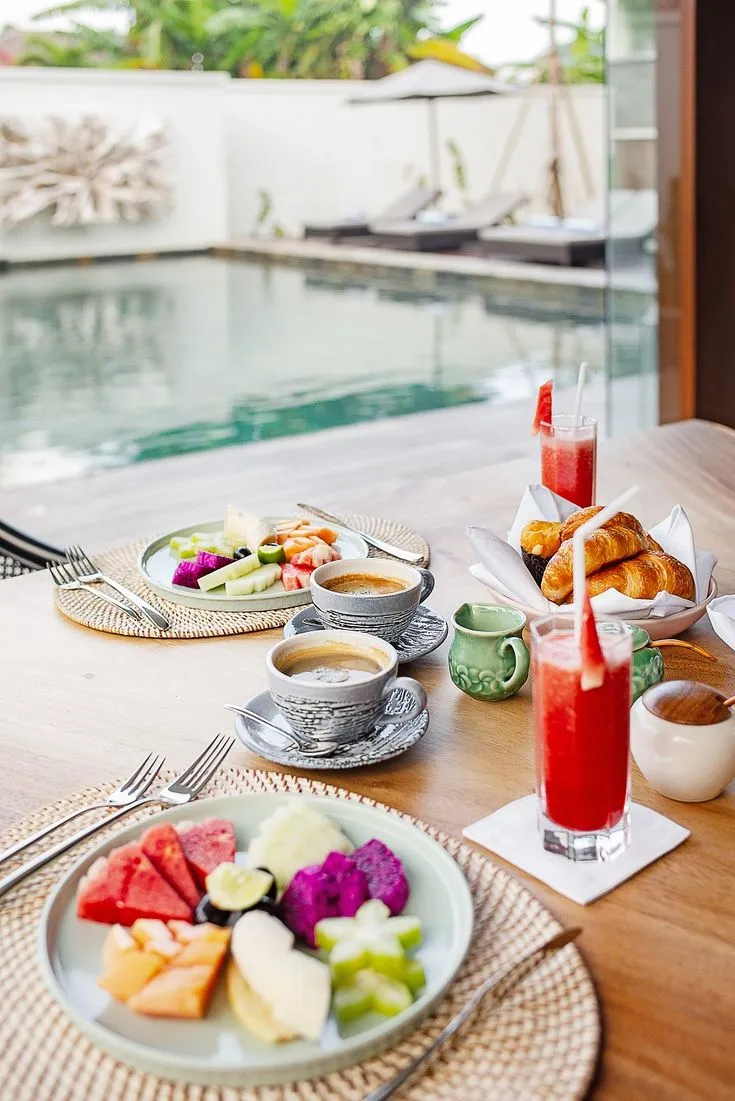
A good Thai villa household — housekeeper, cook, gardener, manager — doesn't just fold linens. Kids learn to make khao soi from the cook on rainy afternoons. They learn that wai, the slight bow with pressed palms, isn't a costume but a courtesy. Housekeepers who've worked with visiting families for years have a sixth sense for homesick eight-year-olds.
One mom from Austin told us her daughter still video-calls the villa's cook every few months. "She learned more about another culture in six weeks than in six years of a classroom," she said. "And so did I, honestly."
This is immersion without the friction — you get the depth of living abroad with the softness of someone else handling the laundry, the groceries, and the boat booking.
Multigenerational, Unplanned-For, and Better For It
The other pattern: grandparents. A villa means private bedrooms, shared living space, and nobody trekking across a resort at 9 p.m. for ice. Grandpa can skip the snorkel trip and read on the deck. The toddler naps in an actual room. Dinner happens when the cook says the fish is ready, not when a restaurant has a table.
Families consistently report the same thing afterward: the trip didn't feel like a vacation, it felt like a chapter of life. A really good one.
How to Actually Pull It Off
A few practical notes if this is stirring something:
- Timing: January through March is Thailand's high season for good reason — dry, sunny, and perfectly aligned with an American winter escape. Shoulder months like November and early December offer lower rates.
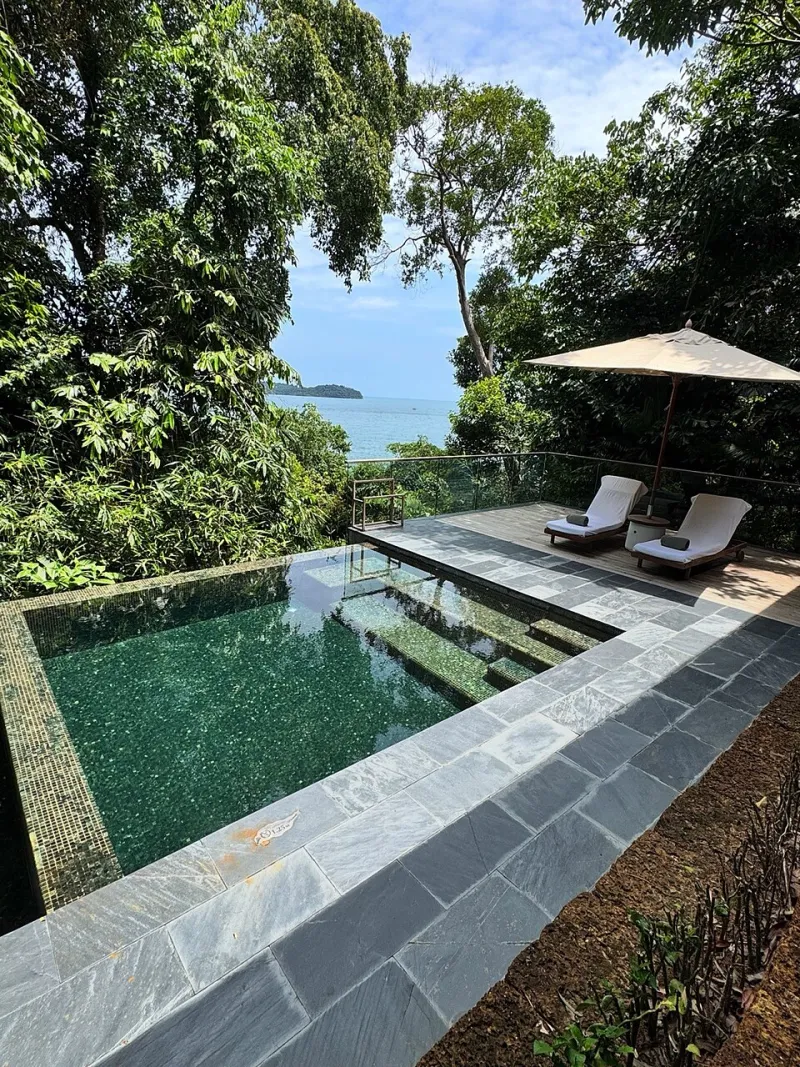
- Villa selection: Look for properties that explicitly welcome long stays and families — backup power, a proper workspace, a pool with a shallow ledge, and walking distance to a real neighborhood, not just other resorts.
- School logistics: Confirm your district's asynchronous policy before booking. Most do, especially post-2020.
- Staffing: Ask about the household team by name. In Thailand, they're the difference between renting a house and living in one.
The Case for Slower
Americans are conditioned to optimize vacations — see everything, rest never, return needing a vacation from the vacation. A Thai villa month inverts that. The days are unhurried because there's no itinerary to defend. The memories compound slowly: the same noodle vendor, the same sunset deck, the same pool game played forty times until it becomes tradition.
You can't get that in a week. You can, it turns out, get it for about the same price.