Meet the Team Behind Your Paradise: What Villa Staffing in Thailand Really Costs
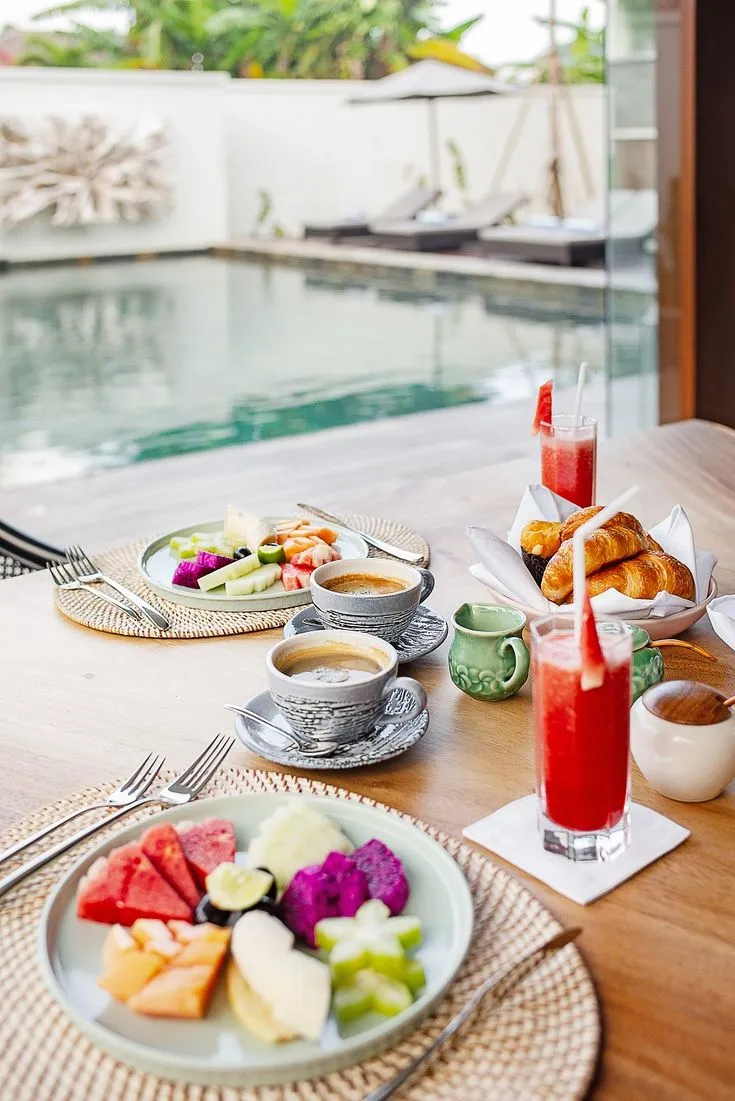
Photo: luxury villa staff serving breakfast poolside Thailand tropical, via i.pinimg.com
You land in Phuket, bleary-eyed after fourteen hours in the air. Twenty minutes later, you're standing in an open-air living room with your toes on cool teak floors, a cold towel in your hand and a glass of lemongrass iced tea sweating on the table. Someone has already unpacked your grocery list. Someone else is quietly asking what time you'd like dinner.
It feels like magic. It's actually a payroll.
At a stateside luxury resort, this level of attention comes bundled into a nightly rate north of $1,000, padded with resort fees, 25% service charges, and a spa menu that reads like a car lease. In a Thai villa, the same experience is delivered by a small, dedicated team — and the economics will surprise you. Let's pull back the curtain.
The Cast of Characters
Most mid-to-high-end Thai villas (think three to six bedrooms) come staffed in ways that would require a small army back home. Here's who's typically on the roster:
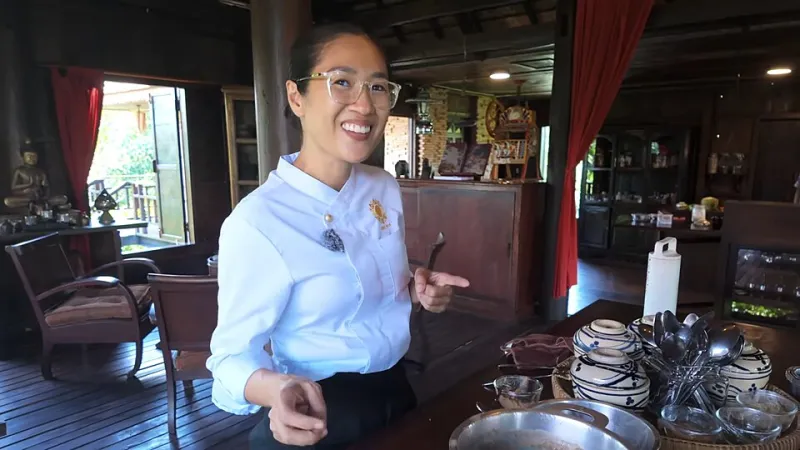
The villa manager is your single point of contact — part concierge, part fixer, part fairy godparent. Need a last-minute speedboat to the Phi Phi islands? A reservation at a fully booked restaurant in Bang Tao? That's the manager's job. Expect $600–$1,200 per month in salary for a top-tier manager.
Housekeepers typically handle daily cleaning, laundry, and breakfast prep. Many villas include a cook who can turn market-fresh seafood into a Thai feast that rivals anything on Sukhumvit Road. Combined housekeeping and cooking staff usually run $400–$800 per person, per month.
Drivers are often optional add-ons rather than full-time staff. A private driver for a full day of island exploring might cost $50–$80 — less than an Uber Black ride from LAX to Santa Monica.
Gardeners and pool maintenance usually come with the property and are invisible to you, which is exactly the point.
Add it all up and a fully staffed villa might carry $1,500–$2,500 in monthly labor costs. That's why a six-bedroom clifftop villa in Koh Samui can rent for less per person than a mediocre hotel room in Miami Beach during Art Basel.
What You're Actually Paying For
Here's the part that confuses American travelers: staffing is almost always included in the rental rate. Unlike a resort, where every interaction seems to trigger a line item, your villa team is paid by the owner, not by you.
So what are the extras?
- Groceries and provisions — you pay cost, sometimes with a modest shopping fee (10–20%)
- Private chef experiences — typically $30–$60 per person for a multi-course dinner, ingredients included
- Excursions and transportation — booked at local rates, not marked up to resort levels
- In-villa spa treatments — a 90-minute massage might run $25–$40, versus $250 at a US hotel spa
The math gets almost comical when you compare. A family of four staying a week at a staffed villa might spend $3,500 total, all-in. The same week at a comparable US resort — with tips, fees, and $18 club sandwiches — can easily clear $12,000.
Tipping: The American Dilemma, Solved
Americans tip reflexively — 20% at restaurants, a few dollars for the hotel valet, something for the housekeeper. So how does it translate?
First, breathe: tipping is appreciated but never expected in Thailand. There's no service charge culture like the US, and no one will chase you down. That said, a generous gesture goes a long way in a country where a housekeeper might earn $500 a month.
Practical guidelines:
- At the end of your stay, a pooled tip of $5–$10 per day of your visit, distributed by the villa manager, is genuinely appreciated
- For a private chef or driver who's gone above and beyond, $10–$20 per day is generous
- Cash in Thai baht is best; US dollars are awkward to exchange in small amounts
- Hand it directly or through the manager — either is fine, though the manager ensures fair distribution
One insider tip: small daily gestures matter more than one big farewell. A 100-baht note (about $3) left for the housekeeper after she notices you've been living on mango sticky rice? That's a memory-maker.
Why the Service Economy Works Differently Here
Thailand's cost of living allows skilled hospitality professionals to earn a solid middle-class wage at salaries that would be impossible in the US. A villa manager in Samui earning $900 a month lives comfortably — often better than an American hotel manager earning ten times that after taxes and rent.
This isn't exploitation; it's a different economic baseline. Reputable villa agencies work with properties that pay fair wages, provide benefits, and retain staff for years — sometimes decades. The best teams stay with the same villa so long that they remember your kids' names from your visit three years ago.
And honestly? That's the real luxury. Not the infinity pool or the sunset deck. It's the retired housekeeper in Hua Hin who remembers exactly how you take your coffee — and has it waiting before you've even asked.
The Bottom Line
When you book a staffed villa in Thailand, you're not paying for a room. You're paying for a team — a manager, a cook, a housekeeper, a driver on standby — all operating at a fraction of what equivalent service costs back home.
The $400-a-day figure floating around in resort marketing? That's an illusion. The real number, spread across a villa, a week, and a team of people who genuinely love what they do, is far kinder to your wallet — and far better for your vacation.
Come see what real hospitality costs. Spoiler: less than you think, and worth every baht.