When the Lights Go Out, the Sky Turns On: Chasing the Milky Way Across Thailand's Darkest Islands
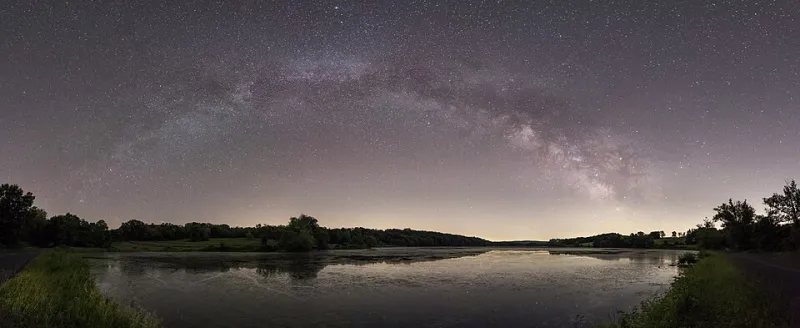
Photo: Juliancolton, CC BY-SA 4.0, via Wikimedia Commons
We'll be honest about the name. Cielo is Spanish for sky, and when we started this company we meant it as a nod to the views — the seaplane windows, the sunset rooftops, the cloud forests of the north. But there's a version of the Thai sky most travelers never see, because most travelers never get far enough from the lights.
It's the version that shows up around 9:30 p.m. on a beach on Koh Kradan, when the last generator on the island quiets down and the Milky Way doesn't so much appear as arrive — a bright, ragged river of stars spilling from one horizon to the other. No telescope required. No app to confirm you're seeing what you think you're seeing. Just you, a lounge chair, and roughly 100 billion stars doing their thing.
For Americans raised under suburban light domes — or chasing dark skies in places like Joshua Tree or Maine's North Woods — Thailand's darkest corners are a genuine upgrade. And thanks to a quiet wave of villa owners leaning into astronomy, you can now experience them with the comfort level of a five-star stay.
Where the Sky Goes Fully Dark
Thailand's light pollution map tells the story: the country's darkness lives at its edges. The deep south, the far north, and a handful of islands in between.
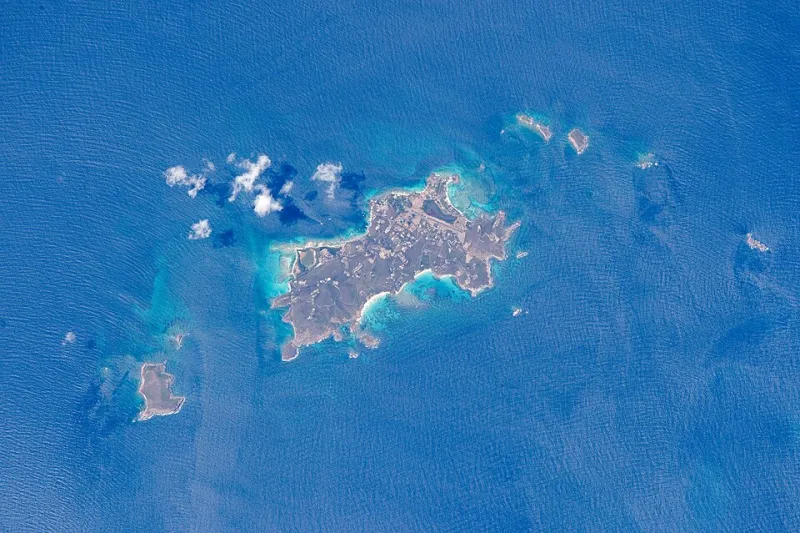
Koh Kradan and the Trang Archipelago. Kradan is a sliver of an island — you can walk end to end in under an hour — with no roads, no big resorts, and precious little electricity after dark. Its neighbors, Koh Muk and Koh Sukorn, are nearly as dark. On a moonless night, the galactic core rises over the water between roughly February and October, and because the beach faces west and south, you get the Andaman Sea as a black mirror beneath it. Bioluminescent plankton occasionally joins the show, which feels almost rude.
Nan Province. Up near the Lao border, Nan is the least-visited province in Thailand by international tourists, and its hill ridges — around Bo Kluea and Doi Phu Kha National Park — sit under some of the darkest skies in Southeast Asia. This is where Thailand's dark-sky movement is most active, with certified dark-sky parks and local astronomy clubs who genuinely know their stuff. Come for the stars, stay for the salt wells and the hiking.
Khao Sok and the southern interior. Not an island, but the lake country around Cheow Lan Reservoir gets you far from Bangkok's glow, with limestone karsts silhouetted against the sky and floating villas that put you asleep — or not asleep — directly under it.
Timing It Right: The Moon Is Your Booking Agent
Here's the single most important planning detail, and it's not dates or flights: the moon phase. A full moon in a dark-sky location is lovely for a beach dinner and lousy for stargazing. You want the new moon, plus or about three days either side.
A few upcoming windows worth penciling in:
- February–April: The Milky Way's bright galactic core rises in the pre-dawn hours over the Andaman. New-moon nights in this stretch are the sweet spot for photographers.
- May–July: The core climbs higher and earlier, dominating the night from midnight onward. Warm, calm seas make this prime island time — just watch the tail end of the southwest monsoon.
- November: The Andaman's driest, calmest month with early-evening core sightings. Short window, book early.
One counterintuitive note: a crescent moon can actually be a feature, not a bug. A thin moon sets within an hour or two of sunset, giving you golden-hour dinner light followed by true darkness. Ask your villa manager for the moonrise and moonset times before you lock in your nightly schedule — good ones will already have them on the itinerary.
The Villa Experience No Resort in Hawaii Can Match
Here's where Thailand pulls ahead of the usual dark-sky destinations back home. In the US, serious stargazing usually means camping — Mauna Kea visitor stations, Death Valley campgrounds, a cold night in a national park. In Thailand, the dark-sky experience has been folded into the villa stay, and it's a different animal entirely.
A growing number of private villas on Koh Kradan, Koh Yao Noi, and in the hills around Chiang Mai and Nan now offer:
- Rooftop or pool-deck telescope setups — think 8- to 10-inch Dobsonians or computerized SCTs, already polar-aligned by staff before you finish dinner.
- Astronomer-guided nights, either resident naturalists or guides brought in from Thai astronomy clubs, who'll walk you through Saturn's rings, nebulae, and the Southern Hemisphere extras — the Carina region, the Magellanic Clouds — that you literally cannot see from the continental US.
- Astro-photography sessions, where a guide sets up a tracking mount and you leave with a Milky Way shot of yourself on the beach. Try getting that at a Death Valley overlook.
- Dark-sky dining, a late supper on the deck with the lights doused and the sky doing the entertainment.
The Southern Hemisphere bonus deserves a mention: from Thailand you'll see constellations — the Southern Cross, Alpha Centauri — that are permanent invisibilities from anywhere in the lower 48. For amateur astronomers, that alone justifies the flight.
How to Actually Book It
A few practical notes from the field:
- Lead with the moon, not the property. Pick your new-moon window first, then find the villa. We can help you match — it's a search most travelers run backward.
- Ask about the sky directly. Not every villa advertises astronomy programming, but many will arrange it. A telescope night with a local guide typically runs a fraction of what a comparable private experience costs in Hawaii.
- Give the south two or three nights. One clear evening is a gift; two or three is a plan. Cloud cover on the Andaman can be fickle outside high season.
- Pack a red-light headlamp. Your night vision takes 30 minutes to build and one phone screen to destroy. Every serious stargazer brings one; now you're a serious stargazer.
The Sky We Named Ourselves After
There's a reason we keep coming back to the sky in everything we do. In a country that delivers impossibly blue daytime water and blush-pink sunsets, the night sky is the final act most itineraries skip — the show that starts when the day-trip boats leave and the island belongs to you.
You can fly to the Caribbean for beaches. You can fly to Hawaii for stars. But for dark skies wrapped around a private villa, with a telescope on the roof and a chef downstairs, there's one answer. Come look up with us.