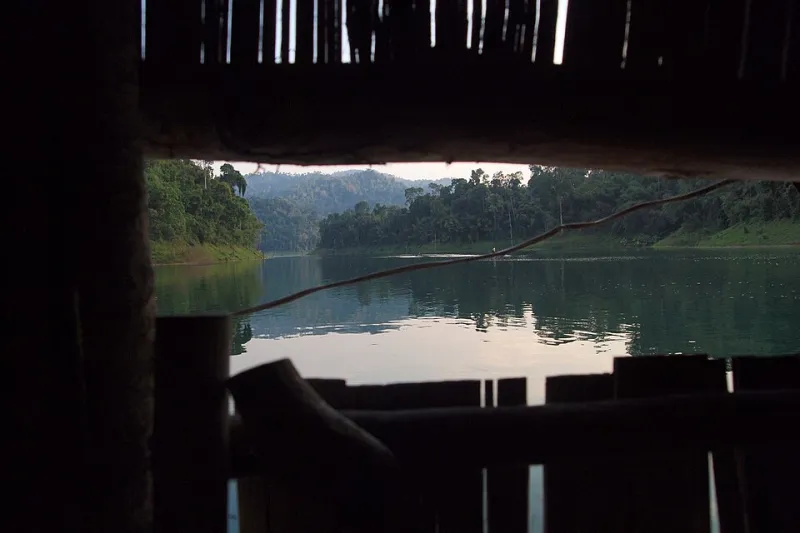
Noodles at Dawn: Why Your Best Meal in Thailand Might Arrive by Paddle
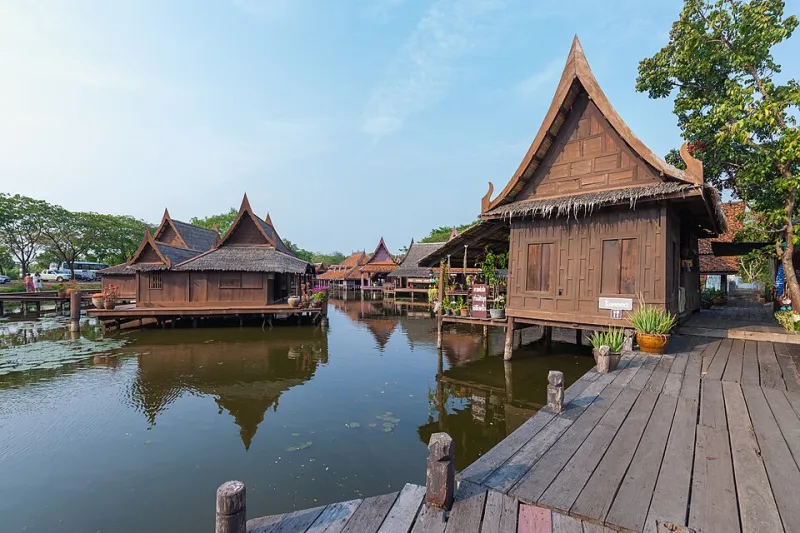
Photo: This Photo was taken by Supanut Arunoprayote. Feel free to use any of my images, but please mention me as the author and may send me a message. (สามารถใช้ภาพได้อิสระ แต่กรุณาใส่เครดิตผู้ถ่ายและอาจส่งข้อความบอกกล่าวด้วย) Please do not upload a
There's a moment, somewhere around your third bite, when you realize every hotel breakfast you've ever eaten has been a rehearsal for this.
You're sitting in a longtail boat, engine idling low, drifting past stilt houses on a canal an hour south of Bangkok. The sky is still that pale pre-coffee gray. And beside you, a woman in a wide-brimmed hat stands in a boat so small it looks like it shouldn't float, assembling a bowl of boat noodles from a dozen pots and jars arranged like a cockpit instrument panel. She paddles alongside you until the bowl is done, hands it over the gunwale, and asks — in Thai, through your guide — whether you'd like it spicy or American-spicy.
There is only one correct answer.
The Market Question: Picking Your Waterway
Thailand has no shortage of floating markets, but not all of them are built for the experience you're imagining. The one most Americans have heard of — Damnoen Saduak — is the one most worth managing expectations about. It's spectacular, it's photogenic, and by 9 a.m. it's also shoulder-to-shoulder, with tour buses unloading in waves and longtail boats idling in a slow-moving traffic jam.
If you want the version where a vendor paddles to you and the only soundtrack is water lapping against wood, point yourself toward Tha Kha or Amphawa instead.
Tha Kha, about 90 minutes from Bangkok, is the early bird's reward. It runs primarily at dawn, serves an actual local crowd buying actual produce, and empties out before most tour itineraries have cleared the hotel lobby. Amphawa, the weekend market an hour and change away, is better known but rewards a sunrise start — arrive by 6:30 and you'll have the canals nearly to yourself before the crowds arrive mid-morning.
The play is simple: charter a private longtail with a guide who knows the vendors, arrive before the light gets harsh, and let the market come to you.
How the Breakfast-Boat Thing Actually Works
Here's the mechanic that surprises most first-timers: you don't dock, order, and wait. The vendors cruise. They paddle their skiffs alongside tourist boats, and each one specializes in a single dish — boat noodles here, grilled coconut pancakes there, iced Thai coffee or fresh sugarcane juice from the boat behind her.
Your guide negotiates a flat rate per dish (typically 40–80 baht, so roughly $1–$2.50 a bowl), and you build your breakfast one paddle-stroke at a time. A good private charter will often pre-arrange this, having a vendor meet your boat at a quiet stretch of canal so you're not competing with a flotilla for her attention.
The dish to know is kuay teow rua — boat noodles. A small, intensely flavored bowl of rice noodles in a broth built on beef or pork, dark soy, star anise, and a whisper of blood that gives it a depth American palates rarely encounter before breakfast. It's a few bites, not a meal, which is precisely the point: you order rounds. Noodles, then pancakes with coconut cream, then coffee. The canal is your tasting menu.
What It Costs to Charter
A private longtail with driver for a two- to three-hour morning run runs somewhere between 1,500 and 3,000 baht — call it $45–$90 — depending on the market, the season, and whether you've booked through a villa concierge or directly at the pier. Add a guide with real English and vendor relationships for another 1,000–1,500 baht, and it's money that pays for itself in the first twenty minutes.
Compare that to the resort brunch you'd otherwise be sleeping through, and the math stops being a conversation.
Why 6 A.M. Beats Everything Else on Your Itinerary
American travelers are conditioned to treat vacation mornings as recovery time. But Thailand runs on a different clock, and the floating markets are the clearest proof. The light at dawn on the canal is the kind photographers chase for years. The temperature is forgiving. The vendors are at their freshest — literally, in the case of the produce.
And there's something else, harder to name: for an hour or two, you're not a tourist moving through an attraction. You're a customer in someone's morning. A woman hands you noodles from a boat she's paddled for thirty years. A kid on the dock waves at you. A monk in saffron robes collects alms from a stilt house as you drift past, and nobody performs it for your benefit.
You'll eat better meals in Thailand. You'll almost certainly eat more expensive ones. But you will not eat a more memorable breakfast than the one that arrived by paddle, somewhere around 6 a.m., while the mist lifted off the water and the canal woke up around you.
Set the alarm. This is the one morning worth losing sleep over.