Chasing First Light: What a Sunrise Balloon Flight Over Thailand Actually Feels Like
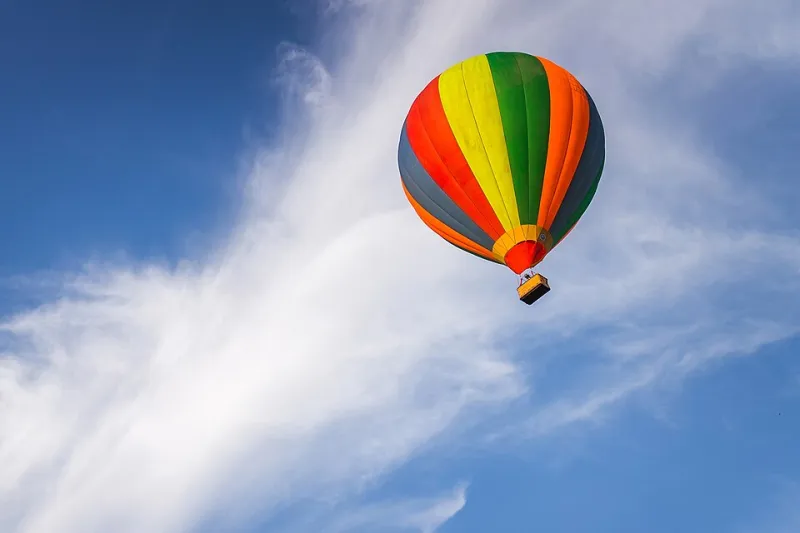
Photo: Alexander Novikov, CC BY-SA 4.0, via Wikimedia Commons
There's a moment, about ten minutes after lift-off, when the burner goes quiet and you realize you can hear birdsong from 1,500 feet up. That's the moment a hot air balloon stops being a bucket-list checkbox and starts being something else entirely.
If you've only ever seen ballooning through Instagram — the honeycomb fairy chimneys of Cappadocia, the vineyard mosaics of Napa Valley — Thailand probably isn't on your radar. It should be. The country's ballooning scene is smaller, cheaper, and in some ways more varied than anything you'll find stateside. And the crowds? Practically nonexistent.
Three Landscapes, Three Completely Different Flights
Thailand's ballooning happens in three distinct theaters, and picking the right one matters more than picking the right tour company.
Chiang Mai's countryside is the classic. You'll drift over emerald rice paddies, mist pooling in the valleys below the northern mountains, with small farming villages waking up beneath you. In the cool season, the pre-dawn air has a genuine chill to it — bring a light layer — and the sunrise over the Doi Suthep range is the kind of thing that makes your phone photos look fake.
Ayutthaya offers something no other ballooning destination on earth can match: ancient temples from above. This UNESCO-listed former capital, an hour north of Bangkok, is a sprawl of brick prangs and reclining Buddhas. Most visitors see it from a bicycle. You'd see it the way the birds do, with the Chao Phraya River snaking through the ruins as the sun comes up behind them.
The Pattaya coastline is the wildcard. Ballooning over the Gulf of Thailand means watching fishing boats trace white wakes across water that shifts from slate to turquoise as the light changes. It's less romantic than the north, arguably more dramatic.
How It Compares to Napa and Cappadocia
Let's talk numbers, because American travelers deserve the real math.
A standard one-hour shared balloon flight in Napa Valley runs $300–$400 per person, and peak-season weekends can push higher. Cappadocia's famous flights have climbed to roughly $200–$300, and you'll often share a basket with 20+ people, launched alongside a hundred other balloons in a traffic jam at altitude.
In Thailand, comparable sunrise flights typically run $100–$180 per person depending on location and season. Chiang Mai and Ayutthaya flights are usually on the lower end of that range. Baskets are smaller, launches are calmer, and you're not one of two hundred balloons in the sky — you might be one of three.
Is the wow-factor lower? Honestly, no. Cappadocia's landscape is surreal, sure. But a sunrise over 700-year-old temples, or over a sea of morning mist with the Thai Highlands on the horizon, competes with anything. And the price difference means ballooning can be one highlight of a Thailand trip rather than the splurge that defines it.
What the Morning Actually Looks Like
Most operators pick you up from your hotel between 4:30 and 5:30 AM — earlier than it sounds, and worth it. You'll arrive at the launch field in the dark, watch the envelope inflate under floodlights (genuinely mesmerizing), and get a short safety briefing from pilots who, at the reputable outfits, hold UK, Australian, or US-equivalent certifications.
The flight itself runs 45 minutes to an hour. Dress in layers; it's cold on the ground pre-dawn and warm by landing. Wear closed-toe shoes you don't mind getting grass-stained. And eat something beforehand — most operators include a light breakfast or coffee spread at the launch site, and many follow the flight with a certificate and a small celebration. Chiang Mai operators often add a full breakfast at a countryside resort afterward.
One thing first-timers never expect: how still it is. Balloons don't drift with wind so much as become part of it. There's no sensation of movement, no wind in your face, no stomach drop. It's the gentlest form of flight that exists.
Booking From the US: The Practical Stuff
A few things American travelers should know:
- Book 2–4 weeks ahead for cool season (November–February), which is peak ballooning weather. Flights are weather-dependent and cancellations happen — build a buffer day into your itinerary rather than booking the morning before your flight home.
- Reputable operators in Chiang Mai and Ayutthaya are bookable through international platforms like Viator and GetYourGuide, which offer USD pricing and US-friendly cancellation policies. Booking direct with the operator is often $10–$20 cheaper if you're comfortable with that.
- Pay by credit card with no foreign transaction fees — most operators accept major cards, and the exchange rate works strongly in your favor right now.
- Confirm the weight limit. Most operators cap passengers around 260–280 lbs per person and ask for honest declarations at booking.
- Travel insurance that covers weather cancellations is cheap and worth it here, since ballooning is one of the most weather-sensitive activities you can book.
The Verdict
Some travel experiences get hyped and then underdeliver. Ballooning over Thailand is the opposite — a genuinely world-class experience that most Americans don't even know exists, priced like an afterthought. If your Thailand itinerary has a free sunrise, spend it in the sky.
The land of smiles looks even better from up here.