Every Stroke Lights Up: A Night Paddle Through Thailand's Living Neon
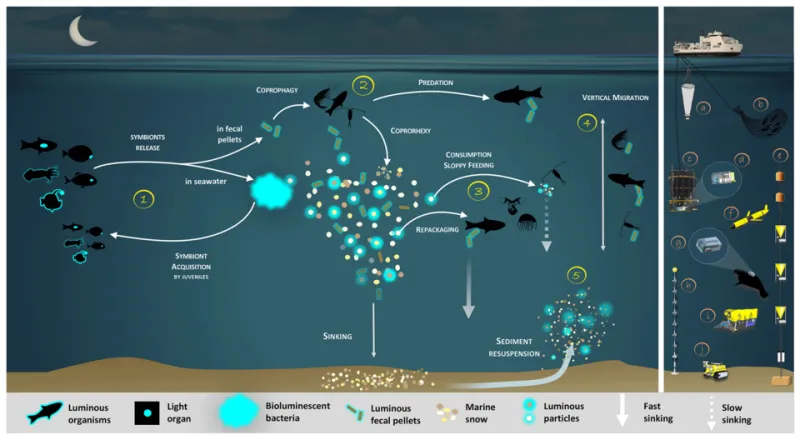
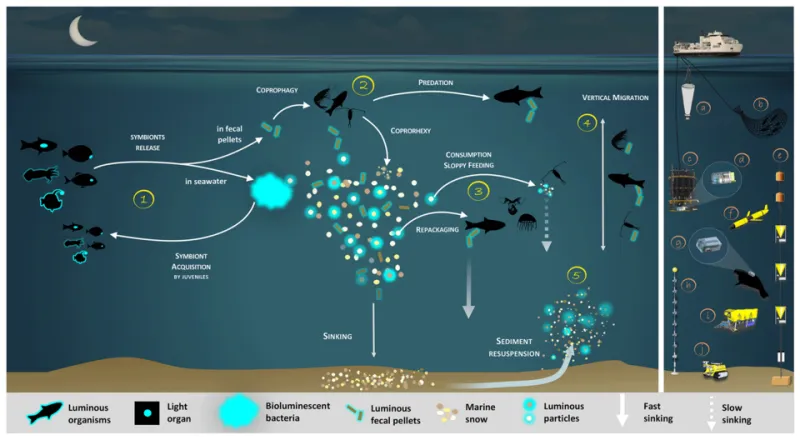
Photo: Lisa Tanet, Séverine Martini, Laurie Casalot and Christian Tamburini, CC BY-SA 4.0, via Wikimedia Commons
There's a moment on a moonless night in southern Thailand — usually about fifteen minutes after you push off from the beach — when your guide stops paddling and tells you to do the same. Drag your hand through the water, they say. And when you do, the sea ignites. A swirl of electric blue trails off your fingertips like you've dipped your arm into a bowl of stars.
This is bioluminescence, and it's not a light show anyone installed. It's alive.
What's Actually Making the Water Glow
The blue fire comes from microscopic plankton — mostly dinoflagellates — that emit a flash of light when the water around them is disturbed. It's a defense mechanism, essentially a marine burglar alarm. A paddle stroke, a fish darting by, a kayak hull cutting through the surface: all of it triggers the glow.
The effect only shows up when conditions align. The water needs to be warm and calm, the plankton population needs to be dense, and — critically — the sky needs to be dark. A full moon washes the display out entirely. That's why the best night paddles happen within a few days on either side of the new moon.
In Thailand, the phenomenon shows up in the sheltered, nutrient-rich waters of both the Andaman Sea and the Gulf. The bays are typically calm after dark, which makes kayaking — not swimming, not boating — the ideal way to experience it. You're low to the water, moving slowly, and every stroke paints a line of light.
Where to Go
Phang Nga Bay. The karst towers here are famous by daylight, but the shallow mangrove channels glow brilliantly on dark nights. Outfitters based around Ao Po and the northern bay run guided tours that weave between the limestone walls with headlamps off, letting the water do the talking.
Krabi and the Ao Nang coastline. The mangrove forests along the Krabi River estuary are a reliable glow zone, and several operators pair the paddle with a sunset start so you drift into darkness as the fireflies come out. Yes — fireflies and bioluminescence in the same evening. It's a one-two punch.
Koh Yao Noi and Koh Yao Yai. These quiet islands between Phuket and Krabi have minimal light pollution, which is exactly what you want. Villa guests here are often twenty minutes by longtail from launch points.
Koh Samui's south coast. On the Gulf side, calm bays around the island's quieter stretches occasionally light up, especially in the drier months when sediment is low.
The Villa Advantage
Here's the part that changes the calculus for American travelers: timing. A new-moon night paddle is a hard scheduling constraint, and a one-night hotel stay gives you exactly one shot. If clouds roll in or you're jet-lagged into a stupor by 7 p.m., the experience is gone.
Base yourself in a staffed villa for a week, and the math flips. A seven-night stay straddling the new moon gives you three or four viable glow nights. Your villa team can track the lunar calendar, liaise with local outfitters, and move your excursion to whichever evening has the clearest forecast. Some villa concierge teams in Phang Nga and Krabi have standing relationships with kayak guides who will launch directly from the villa's beach — no transfer vans, no crowds, just you and the glow.
When to Book
Bioluminescence in Thailand is possible year-round, but the sweet spots are the calmer sea windows: roughly January through April on the Andaman side, and June through September along much of the Gulf. Pair that with a new moon — check any lunar calendar for 2025 and 2026 dates — and you've got your window.
A practical tip for U.S. travelers: book your villa dates around the moon phase first, then book flights. It's the reverse of how most people plan, and it's the difference between seeing this and reading about it.
Why It's Worth Building a Trip Around
Americans will fly to Utah to see the Milky Way and to Alaska for the aurora. Bioluminescent kayaking belongs in that same tier of natural light shows — except it's warmer, cheaper, and you're sitting in a kayak in 82-degree water instead of standing in the snow.
And unlike those other spectacles, this one responds to you. The bay doesn't just glow; it glows because you're there. Every stroke is a signature written in blue fire on black water.
Bring a dry bag, skip the sunscreen for the evening (it can irritate the water and dim the glow), and leave the GoPro on shore — the phenomenon barely photographs. Some things you just have to paddle into yourself.